[et_pb_section fb_built=”1″ _builder_version=”4.21.0″ custom_padding=”0px||0px||false|false” locked=”off” global_colors_info=”{}”][et_pb_row column_structure=”1_2,1_2″ disabled_on=”on|off|off” _builder_version=”4.21.0″ _module_preset=”default” width=”100%” custom_padding=”|40px||40px|false|false” custom_css_main_element=” border-style: dotted;|| border-width: 1px 0px 1px 0px;|| border-color: #aaaaaa;” global_colors_info=”{}”][et_pb_column type=”1_2″ _builder_version=”4.21.0″ _module_preset=”default” global_colors_info=”{}”][dnxte_feature_list_parent dnxte_feature_list_icon_color=”#015AAA” disabled_on=”off|off|off” _builder_version=”4.21.0″ _module_preset=”default” title_text_align=”left” module_alignment=”left” custom_margin=”||||false|false” custom_padding=”|20px||20px|false|false” custom_padding_tablet=”|20px||20px|false|false” custom_padding_phone=”|20px||20px|false|false” custom_padding_last_edited=”on|phone” custom_css_main_element=”float:right;” global_colors_info=”{}”][dnxte_feature_list_child dnxte_feature_list_title=”Dr. R. L. Bhagat” dnxte_feature_list_icon=”||fa||900″ dnxte_feature_list_icon_color=”#015AAA” _builder_version=”4.21.0″ _module_preset=”default” module_text_align=”center” global_colors_info=”{}”][/dnxte_feature_list_child][/dnxte_feature_list_parent][/et_pb_column][et_pb_column type=”1_2″ _builder_version=”4.21.0″ _module_preset=”default” global_colors_info=”{}”][dnxte_feature_list_parent _builder_version=”4.21.0″ _module_preset=”default” title_text_align=”left” custom_padding=”|20px||40px|false|false” custom_css_main_element=”float:none;” global_colors_info=”{}”][dnxte_feature_list_child dnxte_feature_list_title=”Dec 24, 2024″ dnxte_feature_list_icon=”||fa||900″ dnxte_feature_list_icon_color=”#015AAA” _builder_version=”4.21.0″ _module_preset=”default” module_text_align=”left” global_colors_info=”{}”][/dnxte_feature_list_child][/dnxte_feature_list_parent][/et_pb_column][/et_pb_row][et_pb_row column_structure=”1_3,1_3,1_3″ disabled_on=”off|on|on” _builder_version=”4.21.0″ _module_preset=”default” width=”100%” custom_padding=”|40px||40px|false|false” custom_css_main_element=” border-style: dotted;|| border-width: 1px 0px 1px 0px;|| border-color: #aaaaaa;” global_colors_info=”{}”][et_pb_column type=”1_3″ _builder_version=”4.21.0″ _module_preset=”default” global_colors_info=”{}”][/et_pb_column][et_pb_column type=”1_3″ _builder_version=”4.21.0″ _module_preset=”default” global_colors_info=”{}”][dnxte_feature_list_parent _builder_version=”4.21.0″ _module_preset=”default” title_text_align=”left” custom_padding=”|20px||40px|false|false” global_colors_info=”{}”][dnxte_feature_list_child dnxte_feature_list_title=”Dr. R. L. Bhagat” dnxte_feature_list_icon=”||fa||900″ dnxte_feature_list_icon_color=”#015AAA” _builder_version=”4.21.0″ _module_preset=”default” module_text_align=”left” global_colors_info=”{}”][/dnxte_feature_list_child][/dnxte_feature_list_parent][dnxte_feature_list_parent _builder_version=”4.21.0″ _module_preset=”default” title_text_align=”left” custom_padding=”|20px||40px|false|false” global_colors_info=”{}”][dnxte_feature_list_child dnxte_feature_list_title=”Dec 24, 2024″ dnxte_feature_list_icon=”||fa||900″ dnxte_feature_list_icon_color=”#015AAA” _builder_version=”4.21.0″ _module_preset=”default” module_text_align=”left” global_colors_info=”{}”][/dnxte_feature_list_child][/dnxte_feature_list_parent][/et_pb_column][et_pb_column type=”1_3″ _builder_version=”4.21.0″ _module_preset=”default” global_colors_info=”{}”][/et_pb_column][/et_pb_row][et_pb_row _builder_version=”4.21.0″ width=”100%” custom_padding=”|40px||40px|false|false” global_colors_info=”{}”][et_pb_column type=”4_4″ _builder_version=”4.16″ global_colors_info=”{}”][et_pb_image src=”https://baif.org.in/wp-content/uploads/2024/12/Herd2.jpg” title_text=”Herd2″ align=”center” force_fullwidth=”on” admin_label=”Image” _builder_version=”4.21.0″ _module_preset=”default” global_colors_info=”{}”][/et_pb_image][et_pb_text admin_label=”Text” _builder_version=”4.21.0″ text_font=”Open Sans||||||||” text_text_color=”#000000″ text_font_size=”15px” text_orientation=”justified” global_colors_info=”{}”]
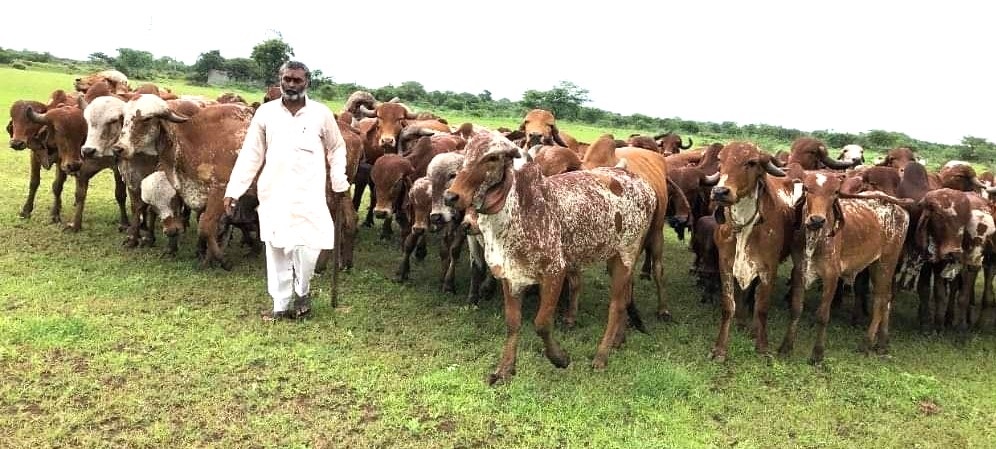
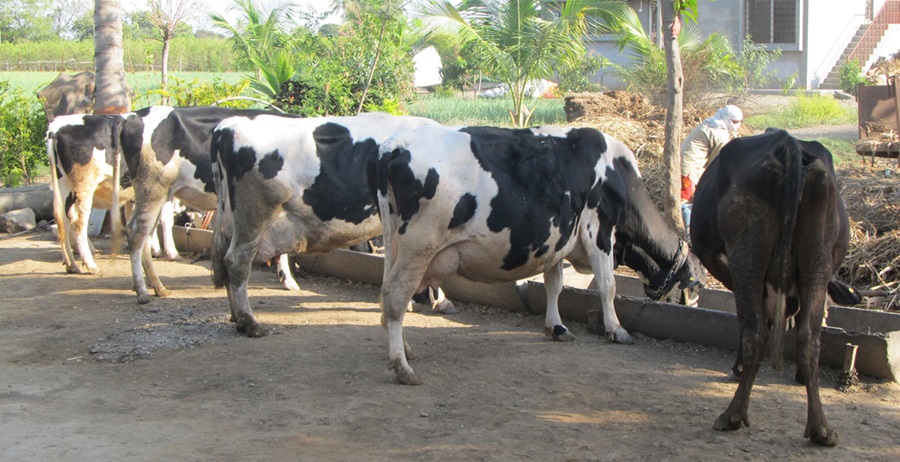
Inbreeding which is the practice of mating animals with blood relationship, has been a practice since long with an aim to preserve desirable traits. However, this practice can threaten the health, productivity and sustainability of dairy animals. Hence, it is necessary to avoid inbreeding in dairy animals.
[/et_pb_text][et_pb_text admin_label=”Genetic Diversity” _builder_version=”4.21.0″ text_font=”Open Sans||||||||” text_text_color=”#000000″ text_font_size=”15px” text_orientation=”justified” global_colors_info=”{}”]
Genetic Diversity:
Genetic diversity is the foundation of a healthy animal population. It provides animals the inherent capacity to adapt to changing environments and to resist diseases.
[/et_pb_text][et_pb_text admin_label=”Adverse effects of Inbreeding” _builder_version=”4.21.0″ text_font=”Open Sans||||||||” text_text_color=”#000000″ text_font_size=”15px” text_orientation=”justified” global_colors_info=”{}”]
Adverse effects of Inbreeding:
- Reduction in genetic diversity: The practice of inbreeding reduces genetic diversity and increases the risk of inbreeding depression, a phenomenon whereby offsprings exhibit reduced fitness, vigour and productivity. The general rule is that each 1% increase in inbreeding coefficient (F) leads to 3-5% decrease in reproductive performance (conception rate, calving rate) and 1-2% decrease in production traits (milk yield, growth rate).
- Reproductive inefficiency: Inbreeding increases the likelihood of hereditary disorders, leading to lower conception rates and higher calf mortality.
- Productivity decline: Traits like milk yield or birth weight of calf often deteriorate in inbred populations, affecting the profitability of livestock farming.
- Increased Risk of Genetic Disorders: The probability of expressing recessive genetic disorders, increases and are manifest in the form of physical abnormalities, reduced immune response or metabolic inefficiencies, which compromise on the welfare and longevity of the animals.
- Vulnerability to Environmental Changes: Populations with limited genetic variation are less capable of coping with environmental changes such as climate variability, new diseases or shifting resource availability. This vulnerability can lead to significant loss in the productivity.
- Ethical and Welfare Considerations: Inbreeding often results in animals suffering from congenital disabilities, reduced life expectancy and chronic health problems. Ethical breeding practices prioritises the welfare of animals, ensuring they lead healthy, productive lives.
[/et_pb_text][et_pb_text admin_label=”Case Studies in Dairy Cattle” _builder_version=”4.21.0″ text_font=”Open Sans||||||||” text_text_color=”#000000″ text_font_size=”15px” text_orientation=”justified” global_colors_info=”{}”]
Case Studies in Dairy Cattle:
Studies have shown that a 1% increase in inbreeding level can reduce milk production by 20-30 kg per lactation. Likewise, fertility issues and calving difficulties increase significantly in inbred herds.
[/et_pb_text][et_pb_text admin_label=”Percent Contribution of Inbreeding over Generations” _builder_version=”4.21.0″ text_font=”Open Sans||||||||” text_text_color=”#000000″ text_font_size=”15px” text_orientation=”justified” hover_enabled=”0″ global_colors_info=”{}” sticky_enabled=”0″]
Percent Contribution of Inbreeding over Generations:
The percent contribution of inbreeding increases with each successive generation when closely related animals are mated. The degree of inbreeding is quantified using the inbreeding coefficient (F), which measures the probability that two alleles at a locus in an individual are inherited from a common ancestor.
-
- Full siblings mating: Full siblings share approximately 50% of their genetic material. When they mate, the chances of identical alleles (genes from both parents) being inherited by the offspring increases. This leads to higher homozygosity which can amplify the expression of harmful recessive genes.
- Parent-offspring mating: This occurs when an offspring is bred with one of its parents either sire or dam. The offspring shares 50% of its genetic material with the parent, leading to a higher likelihood of both inheriting and expressing similar genetic traits. Parent-offspring mating increases homozygosity, leading to a higher chance of harmful recessive traits being expressed. Mating of such animals leads to genetic disorders, reduced fertility, and poor health in the offspring.
- Half-sibling mating: It involves mating two animals that share one parent common. E.g. if a sire is used to breed with multiple dams, the offspring from different dams are half-siblings. Half-siblings share approximately 25% of their genetic material, which is lower than full siblings but still substantial enough to amplify risks associated with inbreeding. Similar to other forms of inbreeding, half-sibling mating increases the likelihood of homozygosity.
- First-cousin mating: First-cousin mating refers to the practice of breeding animals that share a pair of grandparents but have different parents. This form of inbreeding is less intense than parent-offspring or sibling mating but still falls under the category of close-relative mating. It has genetic and practical implications that must be carefully managed. In first-cousin mating, the animals being bred share about 12.5% of their genetic material since their parents are siblings.
[/et_pb_text][et_pb_image src=”https://baif.org.in/wp-content/uploads/2024/12/Milking.jpg” title_text=”Milking” align=”center” force_fullwidth=”on” admin_label=”Image” _builder_version=”4.21.0″ _module_preset=”default” hover_enabled=”0″ global_colors_info=”{}” sticky_enabled=”0″][/et_pb_image][et_pb_text admin_label=”Inbred and Outbred Populations” _builder_version=”4.21.0″ text_font=”Open Sans||||||||” text_text_color=”#000000″ text_font_size=”15px” text_orientation=”justified” global_colors_info=”{}”]
Inbred and Outbred Populations:
Inbred and outbred populations represent opposite ends of the genetic diversity spectrum. The distinction is critical in animal breeding, conservation and genetics to understand the impact on traits such as health, productivity and adaptability.
[/et_pb_text][et_pb_text admin_label=”text” _builder_version=”4.21.0″ text_font=”Open Sans||||||||” text_text_color=”#000000″ text_font_size=”15px” text_orientation=”justified” global_colors_info=”{}”]
- Inbred Population:
- Advantages:
-
- Predictable traits can be attained in future generation.
- Useful for research (laboratory animals).
- Necessary for developing purebred lines.
- Disadvantages:
- Reduced fitness and adaptability to changing environments.
- Increased risk of hereditary diseases in future generations.
Outbred Population:
- Advantages:
- Improved vigour and health in future generation due to heterosis.
- Greater resilience to environmental changes possible due to improved vigour in future generations.
- Disadvantages:
- Traits may vary unpredictably due to heterozygous.
- Less control over specific genetic outcomes.
[/et_pb_text][et_pb_text admin_label=”Mitigation Strategies for Inbreeding” _builder_version=”4.21.0″ text_font=”Open Sans||||||||” text_text_color=”#000000″ text_font_size=”15px” text_orientation=”justified” global_colors_info=”{}”]
Mitigation Strategies for Inbreeding:
- Maintaining a large Breeding Population: Larger populations reduce the likelihood of mating of closely related individuals which therefore helps in maintaining genetic diversity.
- Crossbreeding Programme: Crossbreeding programme helps to introduce new genetic material into a population, improving performance and resilience through heterosis or hybrid vigour.
- Use of Modern Technologies: Modern genetic technologies, such as DNA testing and pedigree analysis, allow breeders to assess genetic relationships and plan matings to minimise or to avoid inbreeding risks in future generations.
- Monitoring and Recording Systems: Accurate record keeping helps track lineage, preventing unintended inbreeding and allowing better management of breeding programmes.
[/et_pb_text][et_pb_text admin_label=”Conclusion” _builder_version=”4.21.0″ text_font=”Open Sans||||||||” text_text_color=”#000000″ text_font_size=”15px” text_orientation=”justified” global_colors_info=”{}”]
Conclusion:
While inbreeding can be useful for stabilising traits in controlled breeding programmes, its negative impact on reproduction and production performance outweigh the benefits in most cases especially in dairy animals. By maintaining genetic diversity and minimising inbreeding, livestock breeders can ensure sustainable and profitable production systems in future generations.
[/et_pb_text][/et_pb_column][/et_pb_row][et_pb_row disabled_on=”off|off|off” _builder_version=”4.21.0″ _module_preset=”default” width=”100%” custom_padding=”40px|40px|40px|40px|false|false” custom_css_main_element=”border: 1px solid rgba(0, 0, 0, .05);” global_colors_info=”{}”][et_pb_column type=”4_4″ _builder_version=”4.21.0″ _module_preset=”default” global_colors_info=”{}”][et_pb_blurb title=”Dr. R. L. Bhagat ” image=”https://baif.org.in/wp-content/uploads/2023/09/L-R-Bhagat.jpg” icon_placement=”left” image_icon_width=”90px” content_max_width=”100%” disabled_on=”off|off|off” _builder_version=”4.21.0″ _module_preset=”default” header_level=”h5″ body_font_size=”14px” body_line_height=”1.3em” image_icon_custom_margin=”|20px|||false|false” image_icon_custom_padding=”||||false|false” module_alignment=”left” border_radii_image=”on|50px|50px|50px|50px” global_colors_info=”{}”]
Advisor
BAIF Development Research Foundation, Pune
[/et_pb_blurb][/et_pb_column][/et_pb_row][/et_pb_section]